Regan has been fishing for over 50 years, and collected more fishing gear than he’dprobably care to admit.
Some of it has been brilliant. Other bits have spent years sitting in the bottom of a tackle box, never seeing the light of day.
These days, I’m more interested in carrying gear that earns its place.
Whether I’m heading out for snapper in the Hauraki Gulf, chasing kingfish or going deep for marlin, hapuku and bass, there are a few fishing accessories I reckon every New Zealand fisherman should think about.
And they’re not all about catching more fish. Some of the most important gear comes into play after you’ve caught one.
1. A reliable fish measure
Before you decide whether a fish is coming home for dinner, you need to know if it’s legal to keep.
That’s why a decent measuring device is one of my essentials.
Don’t rely on guesswork, particularly with snapper that are close to the minimum legal size.
Different species and fishing areas have different rules, so check the current regulations before heading out.
If you’re going to release a fish, you want to make that decision quickly and avoid unnecessary handling.
2. A proper fishing dehooker
This is the one I feel particularly strongly about.
We spend plenty of money on rods, reels, hooks and lures to catch fish. But how much thought do we give to removing the hook when we’re putting a fish back?
I’ve seen too many undersized snapper handled repeatedly while someone struggles to remove a stubborn hook.
Fish have a protective mucus layer, commonly called the slime coat, which helps protect them against infection. Unnecessary handling can damage that layer.
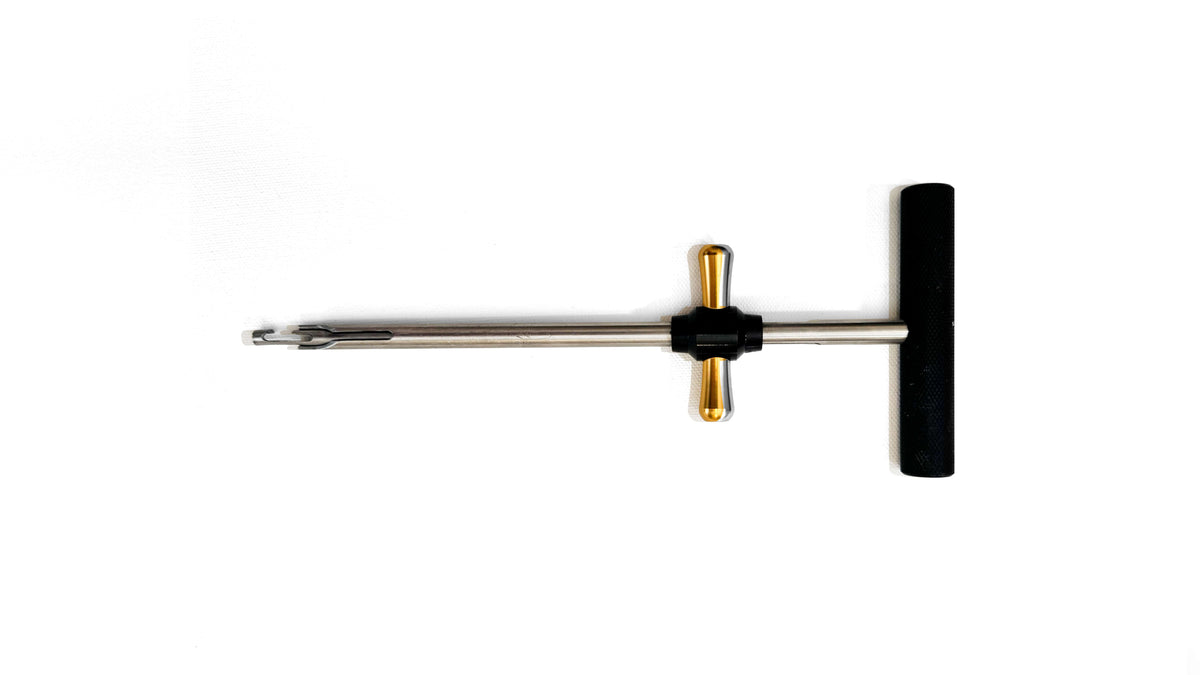
That’s why I developed the Cooper DehookerPro™.
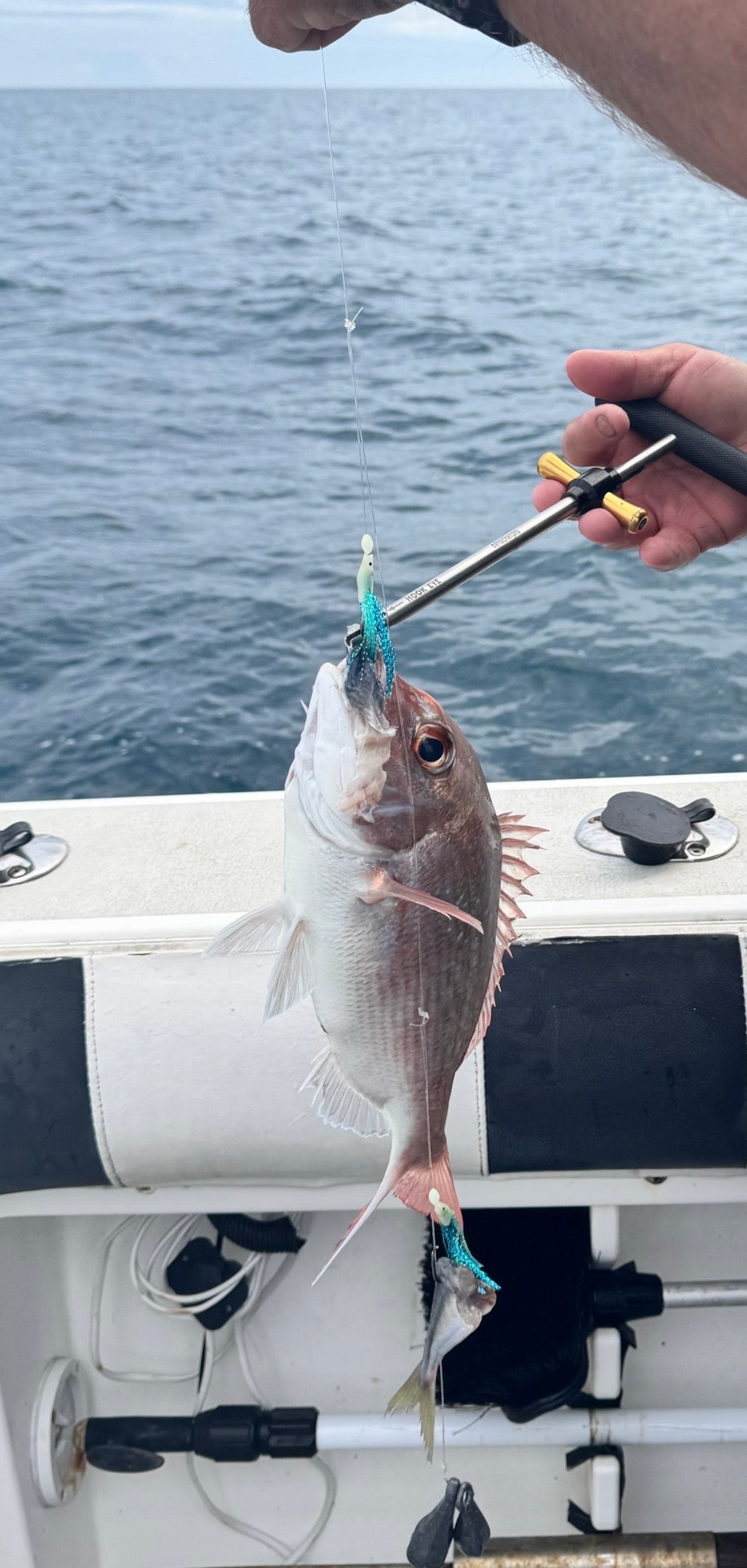
Unlike conventional push-and-pull hook removers, it rotates the hook through 180 degrees, reversing the hook point so it can come out along its entry path.
You follow the line down to an accessible hook eye, engage the tool and release the line tension so the mechanism can work.
It can be used with J-hooks, circle hooks and compatible treble hooks.
When conditions allow, you can often release the fish while it’s still alongside the boat, without needing to handle it.
For me, a good fishing dehooker isn’t just another gadget. It’s part of taking better care of the fish we release.
3. A sharp knife and reliable line cutters
A decent knife is something I wouldn’t head out without.
There’s always bait to prepare, rope to cut or some other job that needs doing.
I also like having a proper line cutter handy.
If you need to cut the trace rather than risk further injury to a deeply hooked fish, you want to be able to do it quickly.
And when you’re fishing offshore, a sharp knife is one of those simple tools that can be useful for all sorts of unexpected situations.
4. Fishing pliers for tackle work
I always have fishing pliers aboard, particularly for changing tackle and cutting line.
They’re useful for opening split rings, working with swivels and sorting out those fiddly little jobs that seem to crop up every trip.
For saltwater fishing, choose a decent corrosion-resistant pair.
Give them a rinse after each trip, just as you would your rods and reels.
5. A fish-friendly landing net
Sometimes you need to bring a fish aboard, whether you’re keeping it or need to handle it briefly before release.
If you’re buying a landing net, I’d recommend rubber or rubber-coated mesh rather than rough knotted netting.
It’s generally gentler on the fish and helps reduce damage to scales and the protective slime coat.
If you can release a fish safely while it’s still in the water, that’s my preference.
But when a net is necessary, choose one that supports the fish properly.
6. Spare tackle — and somewhere sensible to keep it
Hooks, swivels, leader material, sinkers and a few spare rigs.
Nothing particularly exciting, but you’ll be glad you’ve got them when something breaks or the fish start biting.
I’ve had enough years on the water to know that the one thing you leave behind is often the thing you end up needing.
Keep your tackle organised, especially if you’re heading well offshore.
You don’t want to spend ten minutes hunting for a swivel when the fishing’s suddenly come alive.
So my advice is simple: buy decent gear, look after it and carry what you’ll actually use.
And when you’re choosing fishing accessories, think beyond catching the fish.
Think about measuring it, handling it carefully and releasing it in the best possible condition if it’s going back.

Leave a comment
This site is protected by hCaptcha and the hCaptcha Privacy Policy and Terms of Service apply.